
News
Glad to be Alive: Final Fling's first Death Cafe
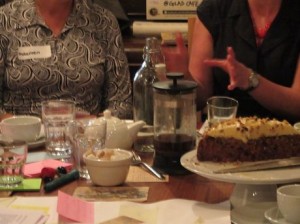
12 people and two hosts came together in Glasgow's funky southside Glad cafe on 14 May during Death Awareness Week to talk life and death.
Barbara Chalmers and Erin Scrutton from Final Fling facilitated the event. Visitors came from Glasgow, Edinburgh, Fife - even Melbourne, Australia!
Central to the chat was coffee and cake. There was talk about the words, thoughts, phrases that come up for people when they think about death. People discussed how our views of death affect how we live our life. Everyone was asked to write a promise to themselves about how they want to live their life... a wee surprise at some point after the event when it plops on the doormat!
 WHAT PARTICIPANTS
SAY:
WHAT PARTICIPANTS
SAY:
Friendly... sharing... interesting... thought-provoking... reflective...
validating... comforting... funny... positive ... joyful... moving... warm...
inspirational... sad... open... knowledgeable... frank
Here's what participants said in their feedback:
'Validated how I already feel about death, having had a positive experience with palliative care at home'
'I'm more enthusiastic and interested in how to take more control'
'It's broken the taboo'
'Thought-provoking. Made me want to contemplate some of the thoughts and ideas shared.'
'I've spent so much time thinking about death lately; I'm kind of sick of myself. It has reminded me to get my act together more and get on with life'
Final Fling plan on holding more death cafes in the future - check out their website for more details.
People of Nairn inspired to live life to the full
Dying to Know?, a joint initiative by Nairn Citizens Advice Bureau and NHS Scotland, was well received in Nairn last week - fantastic given the lure of the sun and the Harbour Fest.
The organisers were delighted with the positive response from visitors with comments such as "Good to see a place where death is talked about openly", "Friends were reluctant to accompany me: they thought it was 'goulish' - rubbish!", "We would certainly attend a follow-up day."
The 20 businesses and organisations who brought displays of their services and gave advice to visitors were also really positive and have offered to do it again! A DVD of the day will be produced to inspire other communities to do something similar.
The event reached 250 people with some travelling from Inverness, the Borders and Huntly. The "different kind of family day out" attracted national publicity from the Scotsman and the Sun indicating the significance of the subject to everyone. The organisers would have liked to see more younger people coming along to get information about putting their affairs in order as, with nearly 20% of people dying in the Highlands being under 65 years old, it is so important for families to be protected from hardship. The children who did come enjoyed the activities on offer and took it all in their stride.
Kate Clark, one of the organisers said " We organised this event to give people the chance to leave their lives as a gift to their families, rather than a burden, and the response has confirmed that it really is possible to feel better about our lives by thinking about our deaths. It is something that does not take a long time, especially with the help available, but has a lasting impact on our well-being."
The Before I Die wall was also a great hit in the community centre, with people of all ages taking part. Noticeable on the comments was that so many of them were achievable so hopefully this short consideration of their death will inspire Nairnites to get out and live their lives to the full. The "wall" has now been cleaned for the last time but Nairn's contribution to the global project will remain forever on beforeidie.cc.
The organisers urge anyone who could not make it along to the day to come along to Nairn Citizens Advice Bureau at any time to obtain free, confidential advice and to discuss their options with an adviser. A follow up meeting - Cake and Questions, about death and dying - will be held in the URC hall on 24th August 2013 at 11am for everyone interested in talking about death, finding out about practicalities and taking some of the fear away from the inevitable consequence of our well-lived lives.
Bereavement costs NHS Scotland £20 million each year
An innovative new study has found that the hidden socio-economic impact of spousal bereavement costs NHS Scotland £20 million each year.
A multidisciplinary team of researchers from across the UK and the Netherlands have recently concluded an investigation on the social and economic impact bereavement has on those living in Scotland.
The study, which was supported by the Scottish Government as part of the programme of work to improve the quality of bereavement care services in Scotland, was undertaken by researchers from Robert Gordon University (RGU), University of Dundee, University of York, University of Utrecht, NHS Tayside and Cruse Bereavement Care Scotland.
They focused on key areas of health, income and employment and found that losing a spouse is not only associated with a comparative decrease in life expectancy, but also with an increased overall likelihood of being admitted to hospital, and with a longer stay there during periods of illness.
The study team concluded that this adds up to a hidden annual extra cost for NHS Scotland of approximately £20 million.
Dr Colin Macduff from RGU’s Institute for Health and Welfare Research (IHWR) said: “More than 200,000 people in Scotland are affected each year by the loss of someone close. Bereavement has social and economic implications for families, businesses, and public organisations, as well as for other organisations which support the bereaved.”
Health economist Dr Dennis Petrie from the University of Dundee added: “Estimating costs in these areas is problematic because bereavement is only one of a number of factors that may be having an impact on social and economic trends. However, by using large linked datasets, and by applying appropriate statistical techniques to create comparison groups and control for other influences, we have been able to uncover a number of previously hidden impacts.”
The total cost of visits to GPs or practice nurses for bereavement issues was found to be around £2.2 million each year, but the study concludes that the figure is likely to be only the tip of the iceberg of associated support costs. It was also found that the bereaved are less likely to be in work during the first three years of bereavement.
The research methods employed by the team will also be useful for further investigation in Scotland and in other countries around the world.
John Birrell, leader of the study team and Convenor of the Scottish Grief and Bereavement Hub, said: “This has been an exciting and challenging project and the study’s findings will be useful both at policy level for better understanding of impacts, and at local level for raising awareness for when a bereaved person will require support.”
For more information about the research, including reports, study findings, methods and background literature, please visit the Grief and Bereavement Hub website.
Death Cafe in Kirriemuir
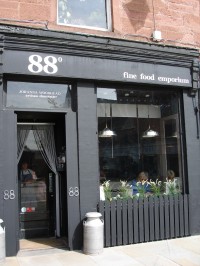 Last week saw the first ever Death Café in Angus, held at 88 degrees in Kirriemuir, as part of Good Life, Good Death, Good Grief Awareness Week.
The Death Café aimed to provide comfortable relaxed environment where people could meet to talk about death, focus on what is important in their lives, celebrate life and what they want to achieve. It is part of the growing Death Café movement, and to date there have been over 100 cafes in the UK and many overseas.
Seven people attended, creating an intimate and friendly atmosphere where everyone had the chance to speak and be listened to, whilst sharing delicious cake and fine coffee.
Margo Sinclair and Helen Dryden who organised the event said: “It was a special evening where everyone participated and really listened to others view points around the sensitive subject of death and dying. Although initially everyone was naturally a bit apprehensive about what to expect, we found we had so much in common and it was a fascinating enjoyable evening.
We would really like to thank the cafe owner Joanne Woodhead, who allowed us to meet after hours in her lovely cafe and provided excellent cake and beverages, and the people who attended."
For more information about the death cafe movement visit: www.deathcafe.com

Fife Public Embrace Awareness Week
Hundreds of people have taken part in a Fife event which has encouraged people to be more open about death and dying.
As part of Good Life, Good Death, Good Grief Awareness Week, over 200 people have recorded their aspirations about what they wish to achieve in life.
An information event held this week at the Mercat Centre in Kirkcaldy invited members of the public to record their hopes and dreams on special ‘Before I Die’ walls, which have been replicated at events nationwide.
Thoughts recorded by people from Fife included, ‘Before I Die, I want to…’:
· Have a successful life
· See my grandchildren grow up and marry
· Learn to play the saxophone
· Travel the world and be happy
· Have kids, get married and get the job of my dreams
Gordon McLaren, NHS Fife Public Health Consultant and GLGDGG Lead in Fife, said: “We’re delighted that the event in Fife has proved to be so successful. Asking people to record what they hope to achieve in their lives, allows people to also consider the fact that they won’t always be here.
“We hope that while people will think about having a good life, they will also be more open to talking about death and dying and supporting each other during a difficult time in their lives.
“The event has also allowed us to talk to many people about a range of practical elements, from Wills and Power of Attorneys to considering their wishes for a funeral.”
The Fife event was included representatives from NHS Fife, Citizen’s Advice, CRUSE, Fife Council, Maggie’s Centre and funeral services.
 RSS
RSS