Make a donation

To Absent Friends Festival 2017

Preparations are well underway for this year’s To Absent Friends, a people’s festival of storytelling and remembrance, which takes place across Scotland from 1-7 November.

The festival, which began in 2014, gives people across Scotland the opportunity to remember loved ones who have died, through stories, celebrations and acts of reminiscence.

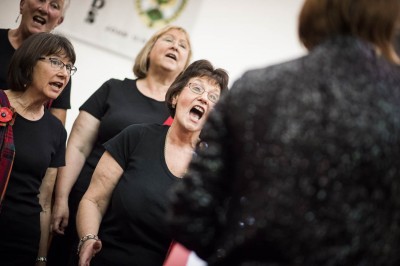
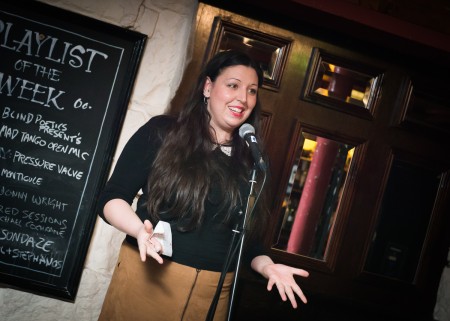
All kinds of different events are taking place across Scotland to mark the occasion. Events already planned for this year include street parties, jazz evenings, coffee mornings, even a barber shop concert with an absent friends theme.

For example in Alloa, lung health support group, Breathe Easy Clackmannanshire will be holding a musical afternoon with Sauchie Community Choir to remember their absent friends.

The Broomhouse Centre in Edinburgh will be remembering their absent friends through storytelling and the creation of a "tree of life" on which to share memories.

Meanwhile in Aberdeenshire, musicians will be gathering at the "Tin Hut" (Gartly Community Hall) for a personal remembrance of their late friend, Keith Cockburn.

The Scottish Storytelling Centre is getting involved, with a workshop exploring the To Absent Friends Supper as a means of recreating an evocative opportunity for storytelling and remembrance in the Scottish tradition.

Many people will hold their own private acts of remembrance as well, and the festival provides an opportunity for people to share their tributes on the online Wall of Remembrance, and their songs on the Remembrance Playlist.

November has long been associated with remembrance of the dead, through traditions like Samhain and All Souls’ Day. To Absent Friends is reviving those lost traditions and helping to create new ones, as a way to support active remembrance of dead people. Talking openly about someone who is dead can often cause discomfort or embarrassment, but To Absent Friends wants to change that.

If you're interested in getting involved, the festival website offers plenty of suggestions, from small private acts of reminiscence to larger events in which communities can come together to celebrate the lives of those who have died.

To Absent Friends will take place across Scotland from 1 – 7 November 2017.

This is set to be the biggest year yet, and festival listings can be viewed on the To Absent Friends website. We’re adding to the list every day, so please get in touch if you would like to get involved. If you're looking for inspiration, some ideas are suggested here: Get Involved.

For more information or to take part, contact Robert Peacock on or 0131 272 2735 or find out more via the website: www.toabsentfriends.org.uk

Planning Your Own Funeral guide published

The Scottish Government have today published a guide to Planning Your Own Funeral.

coffin in hearse

The short booklet takes people through what they should consider when planning their funeral, including decisions such as:

  • whether to be buried, cremated or have your body donated to medical science
  • what kind of coffin you would like
  • how you will be dressed
  • what kind of service, if any, you would like

The booklet also provides further information about financial planning for a funeral, and the assistance available if your family can’t afford to pay for your funeral. There's also space to write down a personal funeral plan which can then be shared with friends and family.

Download Planning Your Own Funeral guide

small grants schemes 2017
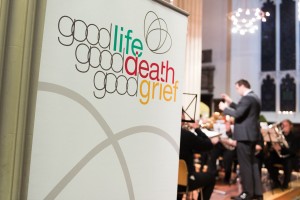
We are pleased to announce that Good Life, Good Death, Good Grief is running two small grants schemes to support organisations wishing to participate in this year's To Absent Friends festival...

small grants scheme for to absent friends concerts

A small grants fund has been established to enable community music groups to put on To Absent Friends concerts. The maximum sum available through this programme is £350 and the deadline for applications is 23 August 2017.

More information is available here: small grants for community music groups.

small grants schemes for organisations

A small grants fund has been set up to support organisations to participate in To Absent Friends, with a particular focus on supporting small organisations to undertake local activities that provide public opportunities for storytelling and/or remembrance of people who have died. The maximum sum available through this programme is £250 and the deadline for applications is 23 August 2017.

More information is available here: small grants scheme

Anticipatory Care Planning Toolkit Launched
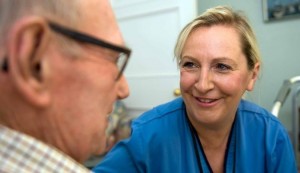
A new Toolkit for Anticipatory Care Planning has been launched by Healthcare Improvement Scotland’s ihub.

Anticipatory Care Planning is about individuals thinking ahead and understanding their health. It is about knowing how to use services better and it helps people make choices about their future care.

Planning ahead can help the individual be more in control and able to manage any changes in their health and wellbeing.

The new toolkit includes:

  • guidance for health and social care professionals
  • advice for individuals
  • downloadable planning materials

The Toolkit can be accessed here.

Posted on June 13 2017 at 15:14

Living and dying with the “unknown unknowns”

In this special blog to mark Death Awareness Week Scotland, Tanith Muller discusses reasons why a change of culture is needed to support people living with progressive conditions to live well and prepare for declining health.

“There are known knowns. These are things we know that we know. There are known unknowns. That is to say, there are things that we know we don't know. But there are also unknown unknowns. There are things we don't know we don't know.”
- Donald Rumsfeld

Life with a condition like Parkinson’s is characterised by uncertainty.

Getting a diagnosis (the known known) typically takes some time, and even then doctors can’t reliably predict what the future will hold for any individual (a scary combination of known unknowns and unknown unknowns). And as the confusing Rumsfeld quote demonstrates, people find themselves in a bewildering and uncertain world where nothing can be taken for granted.

More than 60 Parkinson’s symptoms are possible - but they are not inevitable, and they affect each person in a unique combination of ways. Rates of progression vary considerably. With the right treatment and support, some people live with the condition relatively well for some years. Others face significant impairments within the first five years.

Many people develop dementia, communication and mental health symptoms that can affect their ability to make their wishes known as their condition progresses.

Around 900 people in Scotland die each year with Parkinson’s recorded on their death certificates, but there is evidence that this is significantly under-recorded. The most recent UK Parkinson’s Audit in 2015 showed that only 28% of people with advanced Parkinson's had any recorded discussion of end of life care issues. Very few people with Parkinson’s access specialist palliative care, despite evidence that people at the end of life report quality of life as bad - or worse than - people with advanced cancer and motor neurone disease.

More than 11,000 people in Scotland are trying to balance hoping for the best while preparing for the worst. But facing the inevitability of declining health can be really tough.

Take Janice, diagnosed eight years ago. She says she is “pretending to be ok”.

“I live for the day, and I don’t think about the future a lot. It flits through my mind and then out again. I’ve tried to make life so normal for my two children. I don’t want my kids to have a sick mum, I want them to live their young lives and not be worried.”

Janice was still working as a palliative care nurse when she was diagnosed – and by coincidence, her first client after her diagnosis was a man dying with advanced Parkinson’s. She found the experience unexpectedly reassuring, “He was an older man – much older than me, and his death really wasn’t that different from those I’d seen with end-stage cancer. I realise that dying didn’t frighten me. I thought I feel OK, I can cope.”

That’s not to say that she is without fear. But what Janice fears is dependency, not death. “I can’t stand the thought of being dependent. I’m the person who does. I value my independence and my ability to help other people.”

And the fear of future impairments is common. One man, diagnosed with Parkinson’s in his mid-thirties, gets his wife to vet Parkinson’s publications for him, so that he does not have to read anything depressing. Some people – including those with advanced illness - prefer to avoid meeting others with Parkinson’s in case they represent their potential future. Gerry has lived with Parkinson’s for twenty years, and says he and his wife use humour to deflect their fears, with jokes about care homes to the fore.

One man told me about his late wife. She lived well with her Parkinson’s for eighteen years, before it advanced to a point that made her last four years very difficult.

By all accounts, she received excellent care and support. But the transition to being cared for was an impossible one for her, and she hated the experience. She liked her carers, but found losing her independence degrading. She said that using a hoist made her feel “’like a piece of meat”.

Her widower says that with 2020 hindsight, he wishes that the family had got more support earlier, like a wet room, a stair lift and a wheelchair accessible car. But he admits that his wife was resistant to adopting what she saw as the markers of increasing dependency.

It can be challenging for health professionals, families and friends to support people affected by Parkinson’s to think about and plan for the future. We’re up against a culture that fears disability, frailty, old age and death, and a condition that is characterised by uncertainty. It would perhaps be less intimidating if advance planning were seen as something for everyone to consider, not just those who are facing a future of increasing ill health.

But the issues people with Parkinson’s face are pressing. Creating a culture that supports people to think about the future can - and must – be done.

Parkinson’s UK has developed a range of accredited information materials about advanced Parkinson’s to support individuals and families to prepare for declining health and the end of life. Our free local adviser service and helpline offer confidential one-to-one support to people affected.

The health professional-led UK Parkinson’s Excellence Network is looking at ways to increase the uptake of anticipatory care planning for people with Parkinson’s, and spread this across services in Scotland and the rest of the UK.

The reasons why we must deliver a change in culture ultimately lie with people living with Parkinson’s. The good news is that Janice is already thinking about her future, with a will pending once complex pension issues are resolved. Gerry has already planned his funeral, and is considering how power of attorney could deliver greater peace of mind for him and his wife. And as one carer, whose wife has had Parkinson’s for more than 20 years said to me:

“This is a subject which nobody likes to talk about, but I think it has to be brought out into the open, so that all families affected by Parkinson’s are able to make the right decisions if they need to. My wife and I are glad we’ve had the opportunity to discuss these issues, because we now have a clearer understanding of each other’s thoughts and feelings. We think it’s really helpful to have a prompt for such conversations while the person with Parkinson’s is relatively well. It’s certainly been positive for us.”

Tanith Muller is the Parliamentary and Campaigns Manager for Parkinson’s UK in Scotland.

If you are affected by any of these issues, please visit parkinsons.org.uk to access resources and free confidential support. access resources and free confidential support.

In this section

Loading